Mafiology, n. The methods used by mafias to pursue their agendas.
We’ve all seen portrayals of mafias in movies of course. We have an impression of how a mafia works, and there’s a fair amount of truth in that impression. But because not all of the internal workings of a mafia lend themselves to dramatic movie scenes, important things we should be aware of are just not so visible in our entertainment-dominated ways of learning.
And as with all sorts of other processes, mafiology and its manifestation, mafiocracy, have become more sophisticated and powerful in recent decades, benefiting from developments in digital technology.
While it’s common for political power struggles to exhibit some mafiocratic methods, the legitimate ones take seriously things like constitutions, due process, parliamentary procedure, the rule of law, and some measure of civil behavior and integrity.

Mafias Do Not Care
Mafias care only about their own internal rules, as exemplified by La Cosa Nostra’s requirements for becoming a “made man.” For the rest of us, murder is not only illegal but way over the edge morally. For them, it’s simply a procedural necessity and has nothing to do with rules from outside the organization.
Ideology is another point of distinction. Legitimate politicians tend to have sets of beliefs, particularly when it comes to economics. While the words “conservative” and “liberal” are tossed around without a lot of definition, legitimate politicians tend to believe those words represent ends of a meaningful spectrum of beliefs, and they see themselves as advocates of policies based somewhere on that spectrum.
Mafias will pretend to observe ideologies in their efforts to recruit chumps, but under the surface it is pure brutal power struggle. A mafia does not care about ideology.
Isn’t it amusing that Hitler’s Nazi party and Stalin’s Communist party are purported to represent opposite ends of an ideological spectrum. In fact their “ideologies” were identical. They had only to do with the aggregation of power, the same “set of beliefs,” which is “I believe that I should have what you have.”
Says your local crime boss: “My belief is that I should be in control of everything, capiche?” You won’t find him (never her) discussing the merits of parliamentary versus limited-term governance.
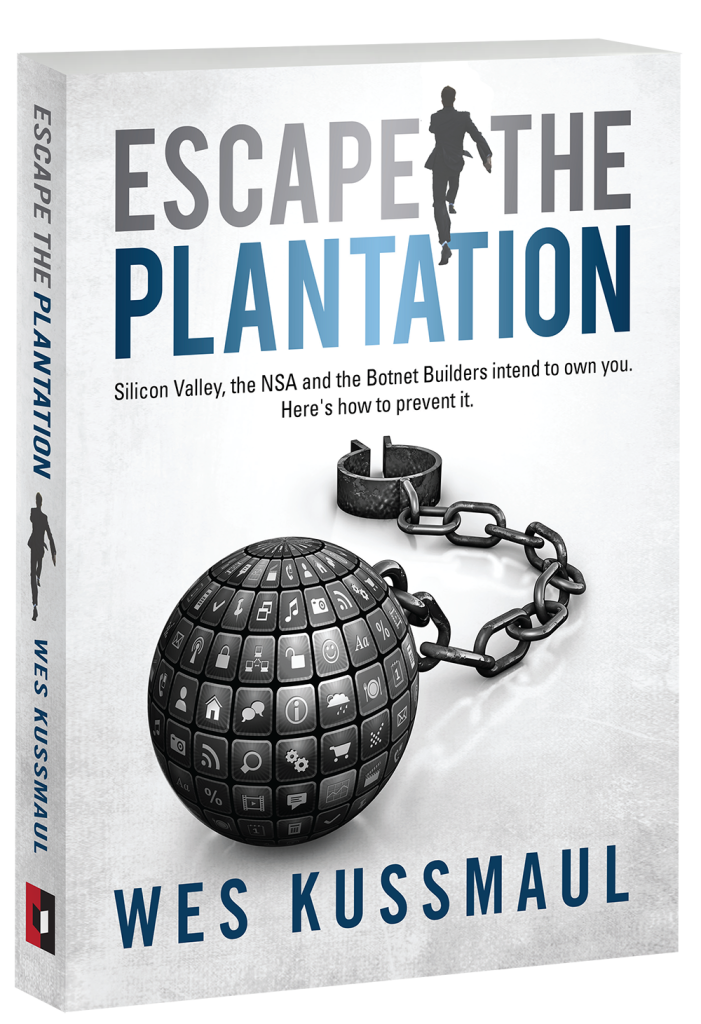
Grab Your Free Ebook
Subscribe to our mailing list and get your free copy of Escape the Plantation.
- Scams & Fraud

Google launched Results About You quietly, and a lot of people who stumble across it ask the same first question:...

Every year, thousands of people send money directly to a fraudster and then discover — too late — that getting...

You get a text saying Royal Mail tried to deliver a parcel and you need to pay £1.99 to rearrange...

“No problem can withstand the assault of sustained thinking.”
— Voltaire
No Tracking Pixels or Beacons
Today's internet has become infested with hidden trackers — tiny “pixel beacons,” scripts, and device tracking tools designed to follow you without your knowledge.
As a Member Enterprise of The Authenticity Alliance, the operator of this website uses no tracking pixels, no beacons, and no covert identity-reporting mechanisms of any kind.
What is Authenticity™?
The word “Authenticity™” identifies a digital or physical space of “accountable anonymity” in which people enjoy both privacy for themselves and accountability from others.
Authenticity™ is the condition that exists in a space where there are
- Digital Signatures Everywhere backed by
- Measurably Reliable Identity Certificates that are
- Owned by their Users and which provide
- Privacy via Accountable Anonymity.
Learn about digital signatures and identity certificates in this short video →
What is The Authenticity Alliance?
We are an Authenticity Growers Cooperative
Similar to familiar agricultural cooperatives in the physical world, The Authenticity Alliance is a network of enterprises and individuals whose purpose is to “grow” Authenticity and bring it to the digital world.
Each Authenticity Enterprise—that is, each Member Enterprise of the Alliance—solves a particular inauthenticity problem in its chosen target market or audience.
What Does The Authenticity Alliance Do?
The Alliance brings together independent enterprises that share a common mission: creating spaces of accountable anonymity where digital signatures, reliable identity certificates, and privacy protection work together to solve real-world inauthenticity problems.
WHO is the Authenticity Alliance?
The Authenticity Alliance is comprised of two groups working together to promote trust and transparency across digital ecosystems.
- Enterprises: Authenticity Enterprises that provide Authenticity solutions for the inauthenticity pains in a specific market or industry.
- Individuals: People who understand the problems of inauthenticity that plague the world’s information systems and who want to help implement and promote Authenticity™ principles.
Authenticity Enterprises
Each is an Enterprise Member of The Authenticity Alliance
Placeware Enterprises
Solutions Enterprises
Community Enterprises
Governance Enterprises
Individual Enterprise in The Authenticity Alliance
Customers and members of an Authenticity Enterprise are automatically eligible to become Individual Members of The Authenticity Alliance.You may also join directly as an individual Member here.